
07 // Spyros Margetas
art & business
Founded in 2021 by Spyros Margetas, Specter Design Group is an Athens-based design studio operating at the intersection of research, strategy, and cultural storytelling. Through a practice rooted in narrative and meaning, Margetas has developed a distinctive creative approach that views design not as surface aesthetics, but as a tool for communication, emotional resonance, and cultural reflection.
Deeply influenced by Greek visual culture and the evolving role of technology, he advocates for a human-centered design philosophy where critical thinking, restraint, and lived experience remain essential in the age of Artificial Intelligence. In this interview, he reflects on authorship, originality, AI, and the responsibility of creators navigating an increasingly automated creative landscape.
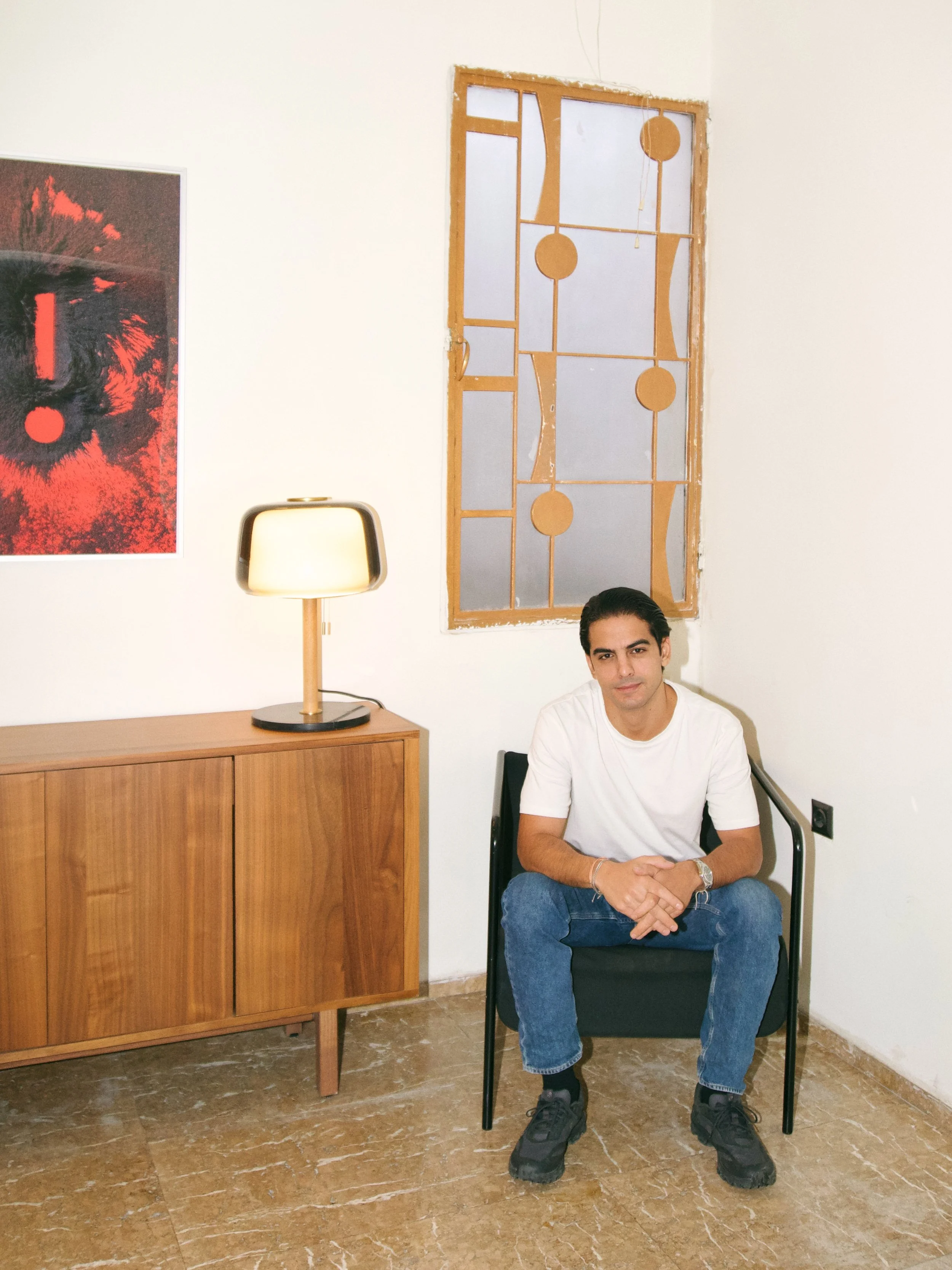
In a world saturated by content, automation, and AI-generated visuals, how do you decide what is worth designing—and what should remain silent?
It is undeniable that the creative industry is undergoing a profound transitional phase, one that is fundamentally reshaping the process and role of designers and creators alike. The rapid evolution of AI models has led to an unprecedented democratization of artificial intelligence, with an increasing number of studios and agencies integrating such tools into their daily workflows in order to meet client demands.
The critical distinction, however, lies not in the technology itself but in how it is used: whether AI serves as a tool to support and develop a carefully considered idea, or whether it becomes an end in itself, encouraging the rapid and superficial production of visuals with limited lifespan and lasting value. The question of “why you design” is therefore more relevant than ever. Designers who have clearly articulated this purpose tend to build from ideas first and use tools as a means of development, whereas when the “why” remains ambiguous, technology often turns into an impulsive shortcut — a solution driven by urgency rather than intention.
Do you worry that local visual identities—like Greek design culture—risk being flattened into sameness? How can designers resist that?
I have deep confidence in Greek designers and creators. Although Greece has gone through a prolonged period of distancing — and in some cases alienation — from its cultural heritage, the Greek element is gradually re-emerging and beginning to reposition itself within a contemporary identity. This is a process that requires time to mature. At the same time, there is an urgent need to enrich our educational system and to meaningfully integrate the work and thinking of influential Greek designers into the education of future generations.
Homogeneity is an easy and reliable path precisely because it is not personal. It is a path that has already been walked. Resisting it requires faith that your ideas and stories are worth telling. In doing so, the path becomes less certain, but unmistakably your own. With courage, patience, and a genuine passion for the discipline, this journey — however demanding — can ultimately yield work of lasting relevance and value.
“Homogeneity is an easy and reliable path precisely because it is not personal. It is a path that has already been walked. Resisting it requires faith that your ideas and stories are worth telling.”
How has the Greek context shaped your visual language, your sense of restraint, or your relationship with meaning?
It may sound paradoxical, but I genuinely believe that we are fortunate to be designing and building creative practices in contemporary Greece. As a design studio, our core influences have always been rooted in Greek culture. The richness of creators and artists this country has produced is such that one does not need to look far beyond its borders for inspiration. Over the past two decades, Greek design — alongside the arts more broadly — has experienced continuous growth and creative expansion.
There is something deeply ingrained in the Greek mindset: a persistent search for meaning, and where meaning is absent, an impulse to construct it. It is a stance that combines boldness with curiosity — a refusal to settle for the surface of the image alone. During my studies at AKTO, I was profoundly influenced by the work of Dimitris Papazoglou, particularly by his use of the Greek alphabet — a practice that consistently operated on second and third layers of conceptual and typographic reading.
As an adult and professional designer, restraint has emerged through experience and long-term engagement with the discipline. As I often tell younger designers in the studio, there is something deeply rewarding in allowing your visual and conceptual language to become more restrained over time. A clear example is the trajectory of Beetroot, whose visual language has gradually become more distilled and distinctive, earning international recognition through clarity rather than excess.
At the same time, figures such as Yiannis Moralis, Takis, and Manos Hadjidakis remain enduring influences. Their work demonstrates an exceptional ability to structure and distill complexity — transforming the Greek, the cultural, and the deeply emotional into a refined, almost intangible form of expression. It is a kind of restraint that does not diminish meaning, but rather intensifies it, and for that reason remains timeless.
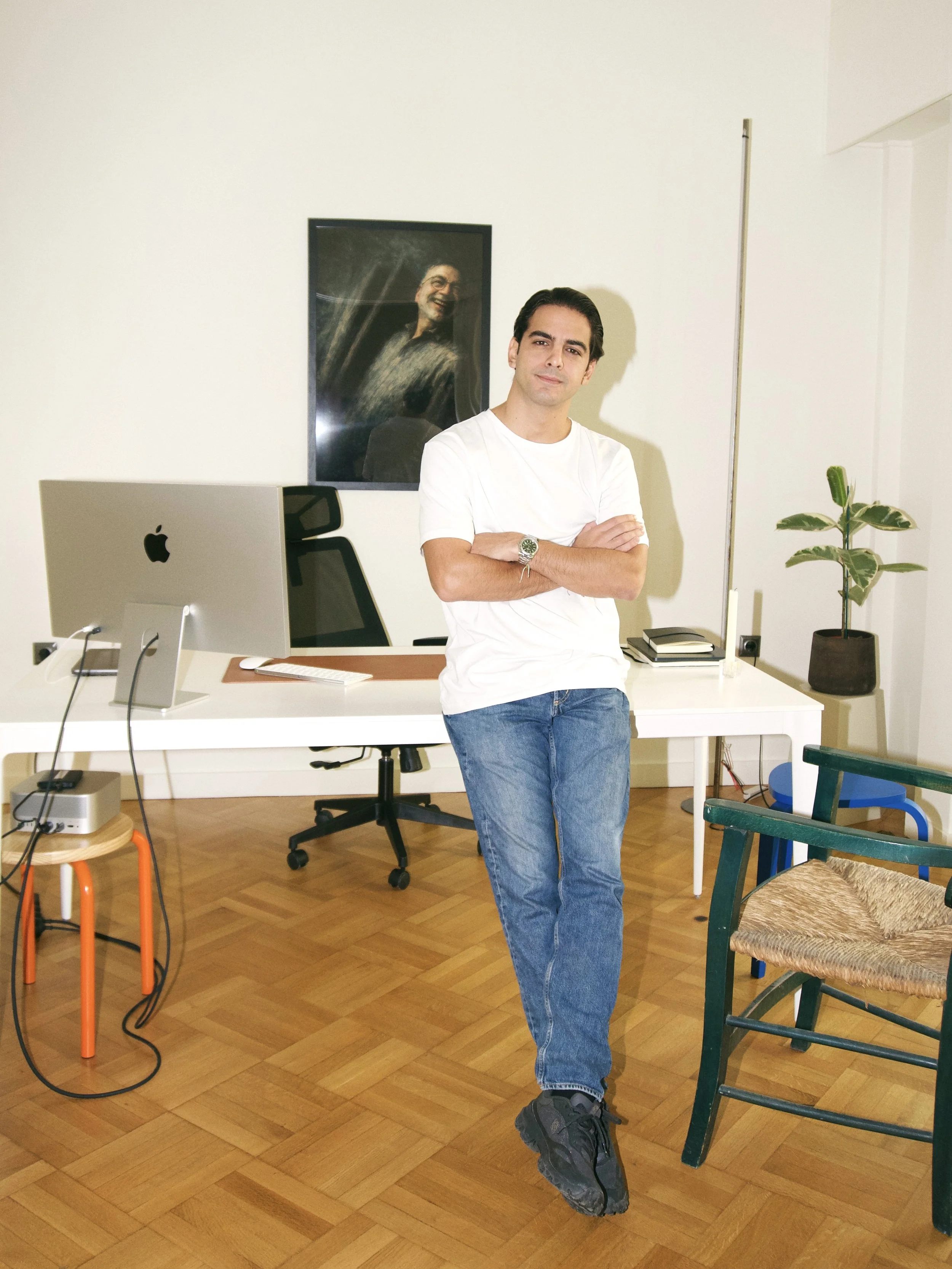
Do you see AI as a tool that strengthens strategic thinking—or one that risks reducing design to surface-level execution?
I do not believe that design—or the role of the designer—is threatened by Artificial Intelligence. On the contrary, we are entering a period in which tools are multiplying and new technologies are being integrated into creative practice, gradually reshaping the DNA of our work. This shift, however, does not imply the replacement of designers by machines. While I understand the concerns that are often expressed, this moment represents a transition of roles rather than a threat of disappearance.
Strategic thinking does not originate from any tool, regardless of its technological sophistication. It either exists within the designer or it does not. It is the result of long-term engagement with the discipline, cultivated through experience and strengthened by critical thinking and conscious observation. Artificial Intelligence expands the field of possibilities, reveals new perspectives, and opens pathways for exploration.
Whether these new paths are pursued—and in what way—remains an entirely human decision. The designer is the one who determines whether the capabilities offered by AI align with their philosophy and meaningfully enhance their work. Within this balance, AI does not function as a substitute for strategic thinking, but as a catalyst for those who already possess clarity of intent and direction.
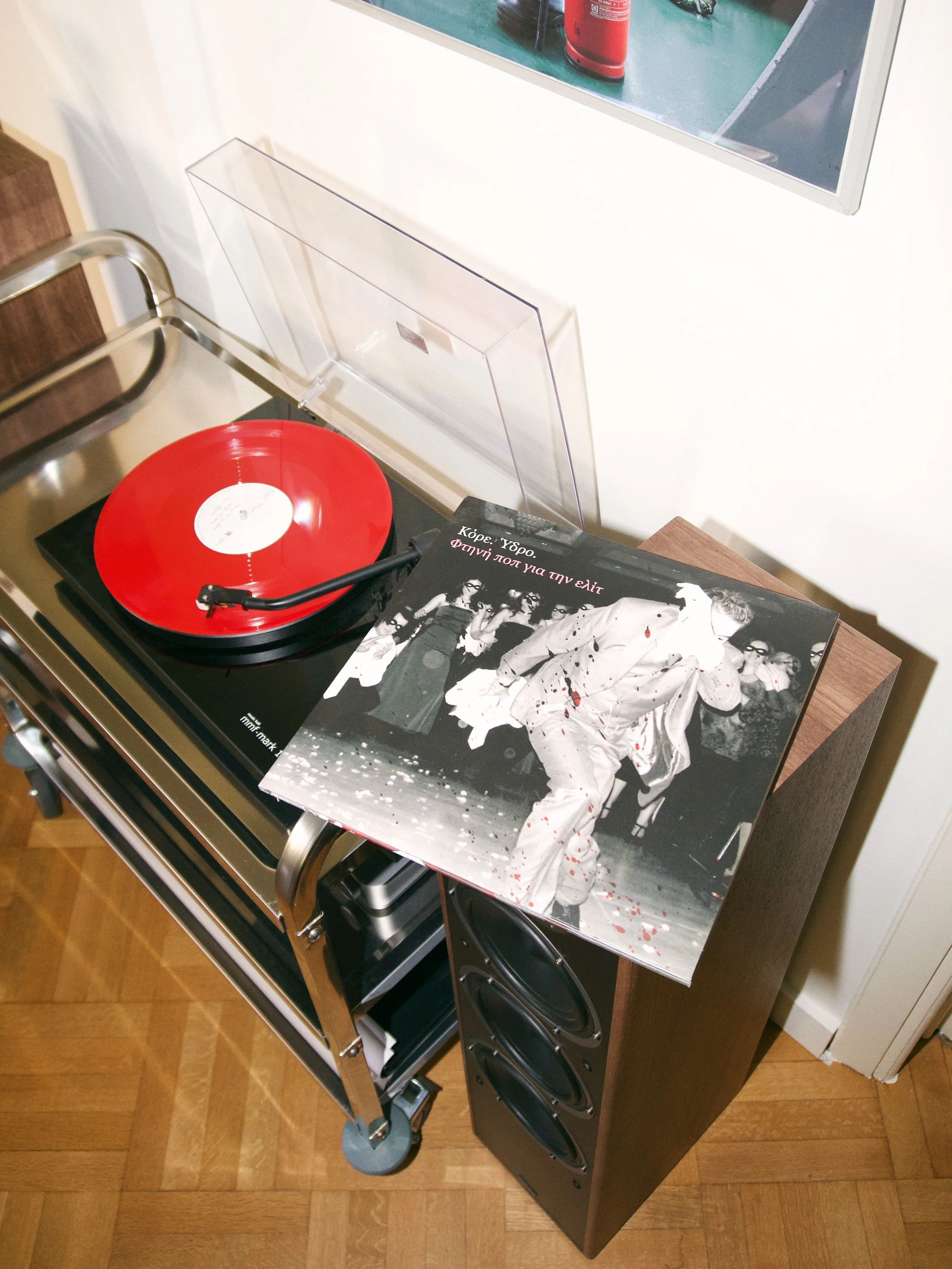
“History, however, has shown that in a marathon, the winner is the one who remains faithful to their process. That is precisely where I locate ethics.”
What do you think people should really know about a designer in 2026—tools, taste, values, or the ability to question systems, including technological ones?
I’ve never been a case that was fully embraced by fellow designers from the beginning — precisely because I questioned symbols, established norms, and conventional client relationships. Starting from there, I would say that the most important thing for a designer — every year, not just in 2026 — is to shed the narrow framework of the “designer” identity and begin to see themselves as a creator.
This shift provides the spark and flexibility needed to discover the tools that can express one’s own personal story. Inevitably, it also distances them from reproducing outdated ideas that belong to someone else — an already accepted designer. To constantly challenge oneself. And to drink plenty of water.
“A machine cannot provide answers when one’s lived experience is empty. The real danger lies in the endless pursuit of meaning through the machine rather than through life itself — the true creative force behind every artistic or applied practice.”
As authorship becomes increasingly blurred, how do you personally define originality in design—through intention, process, ethics, or outcome?
Today, more than ever, I value personal voice and perspective in a work far more than whether I like it or consider it tasteful. I deeply respect the creative process itself, especially when it involves some form of manual labor, regardless of the final outcome.
Commitment to the process — independent of results — is, today, a fundamentally radical act and one that deserves recognition.
Unfortunately, those rich in talent and creative courage often lack a strong voice, while less capable individuals manage to “shout” more persuasively. History, however, has shown that in a marathon, the winner is the one who remains faithful to their process. That is precisely where I locate ethics.
In the age of AI, what does research mean to you now—data, human interaction, cultural observation, intuition—and what must remain human?
The era of Artificial Intelligence and generative models is not a future promise; it is already here and has fundamentally transformed the creative process. Particularly in the fields of research and preparatory exploration, technology now allows us to engage with data, patterns, and behaviors that until recently were difficult—if not impossible—to access.
As I mentioned at the 1st Specter Futures, Artificial Intelligence is no longer limited to mapping audiences into broad, generalized categories. Instead, it enables us to understand and respond to the needs of each individual personally. This represents a profound shift: from the mass and the collective toward a “culture of the individual”—the habits, desires, and expectations of the single person. In this transition, the sense of collective belonging gradually begins to recede, raising new questions and responsibilities for the role of the creator.
Within this new landscape, what must remain deeply human is not only intuition or emotional intelligence, but the responsibility of interpretation and judgment. Technology can analyze, predict, and propose; it cannot decide what truly matters, what is worth expressing, or how it should be communicated. The selection of meaning, the ability to reconcile contradictions, to recognize cultural boundaries, and to place the human—rather than the data—at the center of the process remain fundamentally human acts. This is precisely where the role of the creator lies today: not as an executor of possibilities, but as a conscious curator of meaning.
What is one misconception about AI designers should stop worrying about—and one risk they should take far more seriously?
The greatest misconception of our time is the belief that there are such things as “AI designers.” I do not consider model operators to be designers — nor do they need to be. The role of the visual communication designer is fundamentally different from that of the creator.
Within this distinction, however, lies an inherent risk: the confusion around what it actually takes to become a better designer or creator. This risk does not stem from the technology itself, but from the search for answers through it.
A machine cannot provide answers when one’s lived experience is empty. The real danger lies in the endless pursuit of meaning through the machine rather than through life itself — the true creative force behind every artistic or applied practice.
As authorship becomes increasingly blurred, how do you personally define originality in design—through intention, process, ethics, or outcome?
Today, more than ever, I value personal voice and perspective in a work far more than whether I like it or consider it tasteful. I deeply respect the creative process itself, especially when it involves some form of manual labor, regardless of the final outcome.
Commitment to the process — independent of results — is, today, a fundamentally radical act and one that deserves recognition.
Unfortunately, those rich in talent and creative courage often lack a strong voice, while less capable individuals manage to “shout” more persuasively. History, however, has shown that in a marathon, the winner is the one who remains faithful to their process. That is precisely where I locate ethics.
If success weren’t measured by clients, visibility, or global validation, what would you choose to design next—and what question about the world would you want it to ask?
If success, recognition, and acceptance were not the ultimate goal, I would devote all my energy to expressing my emotions and lived experiences through stories created with the help of AI.
I firmly believe that in the era of these tools, it will not be the merely skilled designers who stand out, but the creators who have something meaningful to say — a story with a beginning, a middle, and an end, one that people can truly relate to.
For this reason, I would turn to filmmaking as a means of exploring the inner void we all carry within us: how it is formed, how it shapes us, and how, through trauma and wounds, one can arrive at their own truth.
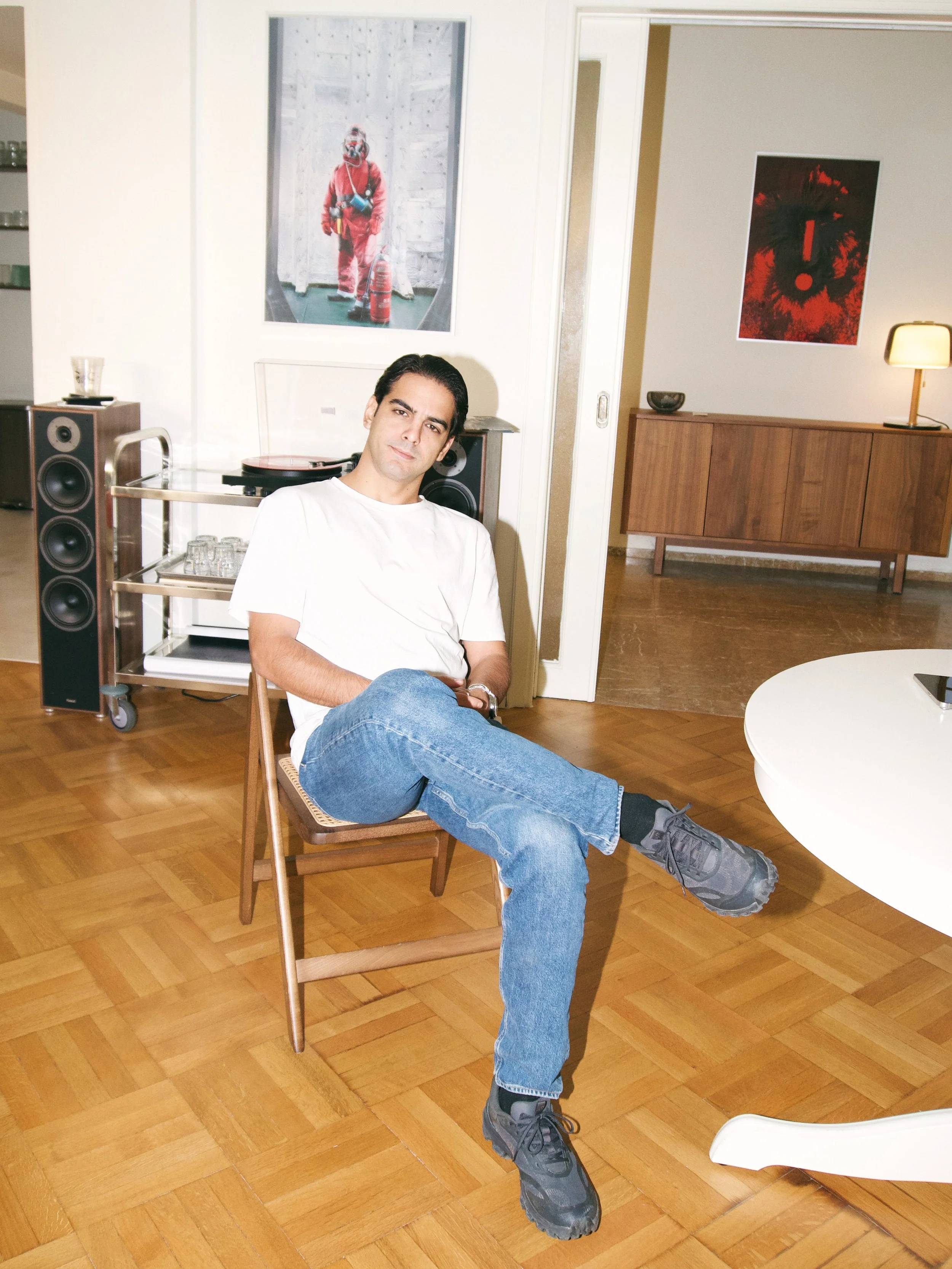
shot by Vas Thalis